Between 15–19 September 2025, thirty-one soldiers and veterans from across the Royal Anglian Regiment deployed to Turkey to conduct a Battlefield Study (BFS) of the Gallipoli Campaign, one of the most significant operations of the First World War. The study included visits to the key battlefields of Cape Helles, ANZAC Cove, and Suvla Bay, where our regimental forebears from Norfolk, Suffolk, Essex, Bedfordshire, Northamptonshire, Lincolnshire fought with distinction.
The first day saw the group fly into Istanbul with our guides from Battle Honours tours, Julian Whippy and Steve Chambers. We then moved down to the Gallipoli peninsula, with a stop at Tekirdag which is famous for it’s Kofte (a theme for the trip), before arriving at our hotel in Cannakale.
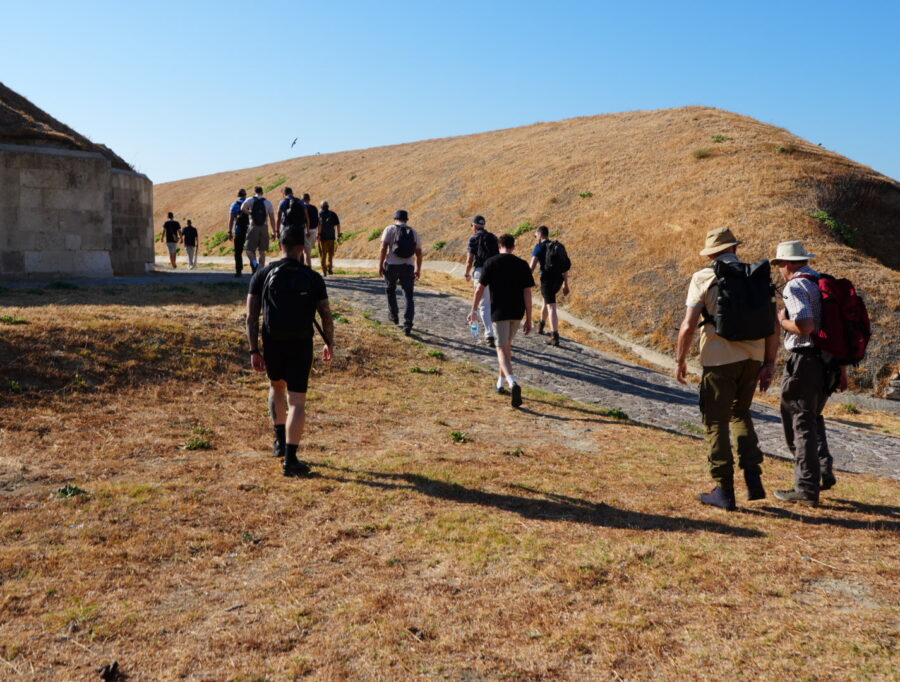
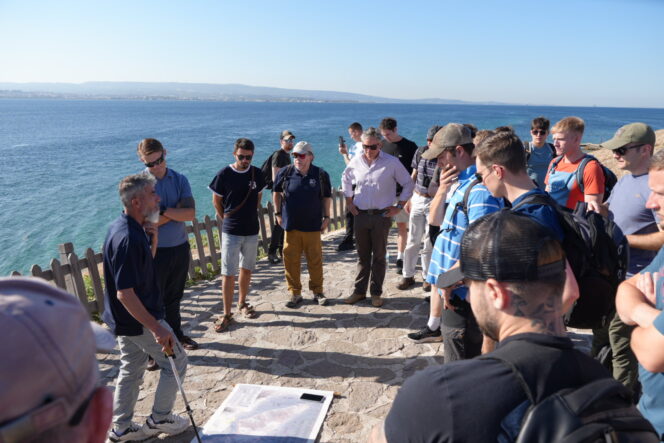
The second day saw an early start for the group to catch a rather pleasant ferry over the Dardanelles to Kilitbahir on our way to study the Helles landings. We were given the chance to walk the battlegrounds of V and W beach on the southern tip of the peninsula, which with hindsight are somewhat exposed for daylight littoral operations in wooden boats.
A/Capt Chapman also treated the group with his insights on the differences between a boat and a ship. The group then moved to the imposing obelisk of the Helles monument, a fitting tribute to the brave sacrifices made by the British forces that were killed throughout the campaign, the remains of whom are largely lost.
Lt Irvine had a true Who Do You Think You Are moment when he found a relative of his inscribed on the monument. The group returned to the hotel after a rather sombre day of walking around these battlegrounds to have some well-earned Kofte for dinner.
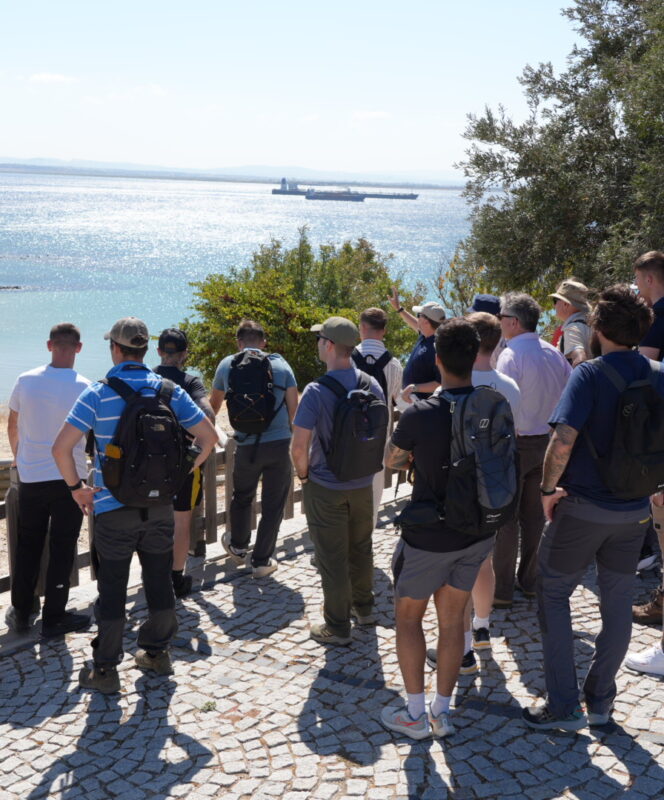
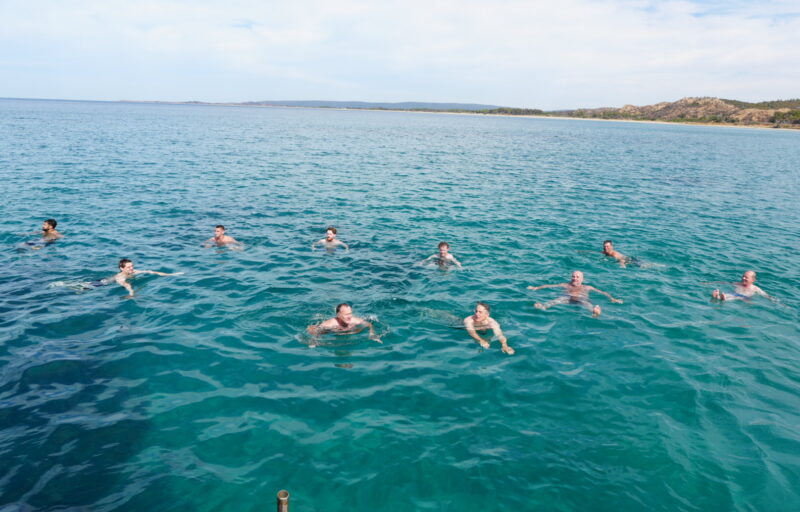
The third day dawned, and the group used the ferry once more to cross the Dardanelles and visit the ANZAC sector. This began with a study on the Gaba Tepe landings conducted from a dive boat and a quick swim in the Aegean in order to understand the conditions the ANZAC forces would have faced on the day of their landings.
Once ashore, the group enjoyed a Kofte-based lunch before travelling up into the mountainous terrain around The Nek and the Battle of Lone Pine. The memorials here showed the brave sacrifices made by the soldiers, where many of the trenches can still be seen very prominently.
The ANZAC and Ottoman forces were within grenade range of each other for the majority of the 9 month campaign, which opened the groups eyes to the reality of warfare in the early 20th Century. The group again returned to the hotel before going out for a Kofte dinner in a local restaurant, where Lt Irvine also managed to show off his DJ skills to the group.
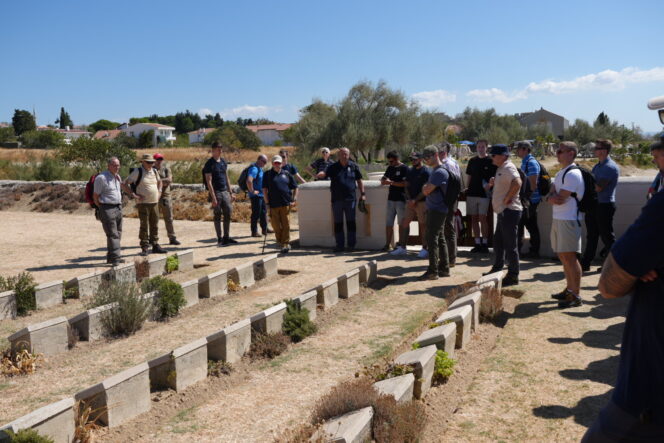
On the fourth day, the group spent the morning visiting the headquarters of Mustafa Kemal Ataturk, the commander of the Ottoman forces. Our local guide, Adem, showed us the campaign from the opposing perspective and how important this campaign was for the ‘sick man of Europe’ to evolve into modern day Turkey. Adem also went in to great detail about the current situation in modern Turkey and similarities between the political landscape in 1915 and now.
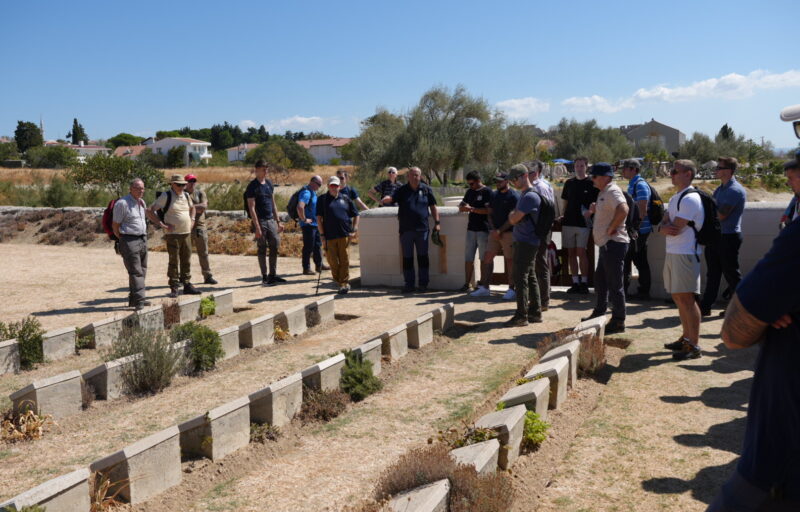
We then moved to Suvla bay, where many soldiers of our forebear regiments bravely fought and died. Our guides took us to the site where the myth says the 1/5th Battalion Norfolk Regiment ‘The Sandringham Pals’ disappeared into a cloud of smoke or were abducted by aliens. This myth has since been disproved and the battalion was likely overextended from the rest of the brigade and behind the Ottoman front line, where they marched into machine gun fire and were mostly decimated, except a few survivors. We visited the Green Hill war grave cemetery, which is dedicated to many of our forebears and conducted a ceremony of remembrance in their honour.
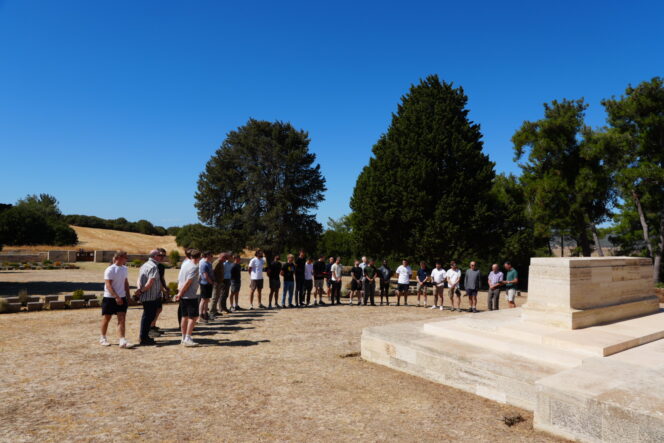
The group then returned to the Asiatic side of the Dardanelles and took a quick trip up the coast to see the remains of the city of Troy as a final stop before the end of the study. This included a guided tour from Adem, who showed us the city from its first inception, right through to when the Romans took over.
Gallipoli remains one of the most demanding and instructive campaigns of the First World War. It speaks not only to our regimental history but also to the realities of expeditionary warfare, joint operations, and leadership in adversity. This Battlefield Study ensured our soldiers returned with a stronger sense of heritage and sharper professional insight.
Follow us on Instagram
Follow us on instagram
Read more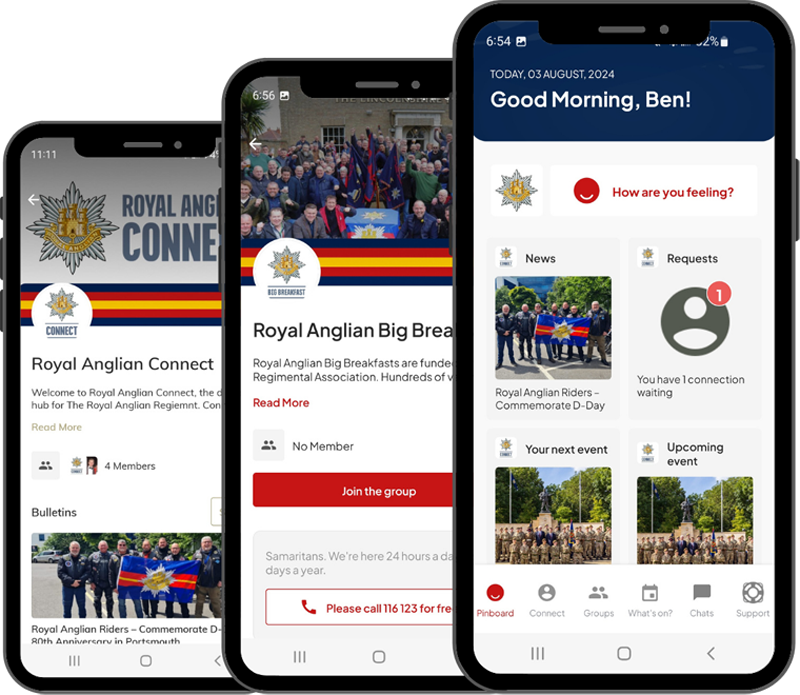
Sign up or Access our
APP - CONNECT
The Royal Anglian CONNECT App is free for serving personnel, veterans, Cadets Adult volunteers, partners and family members.
Find out more